
What is Dry Needling?
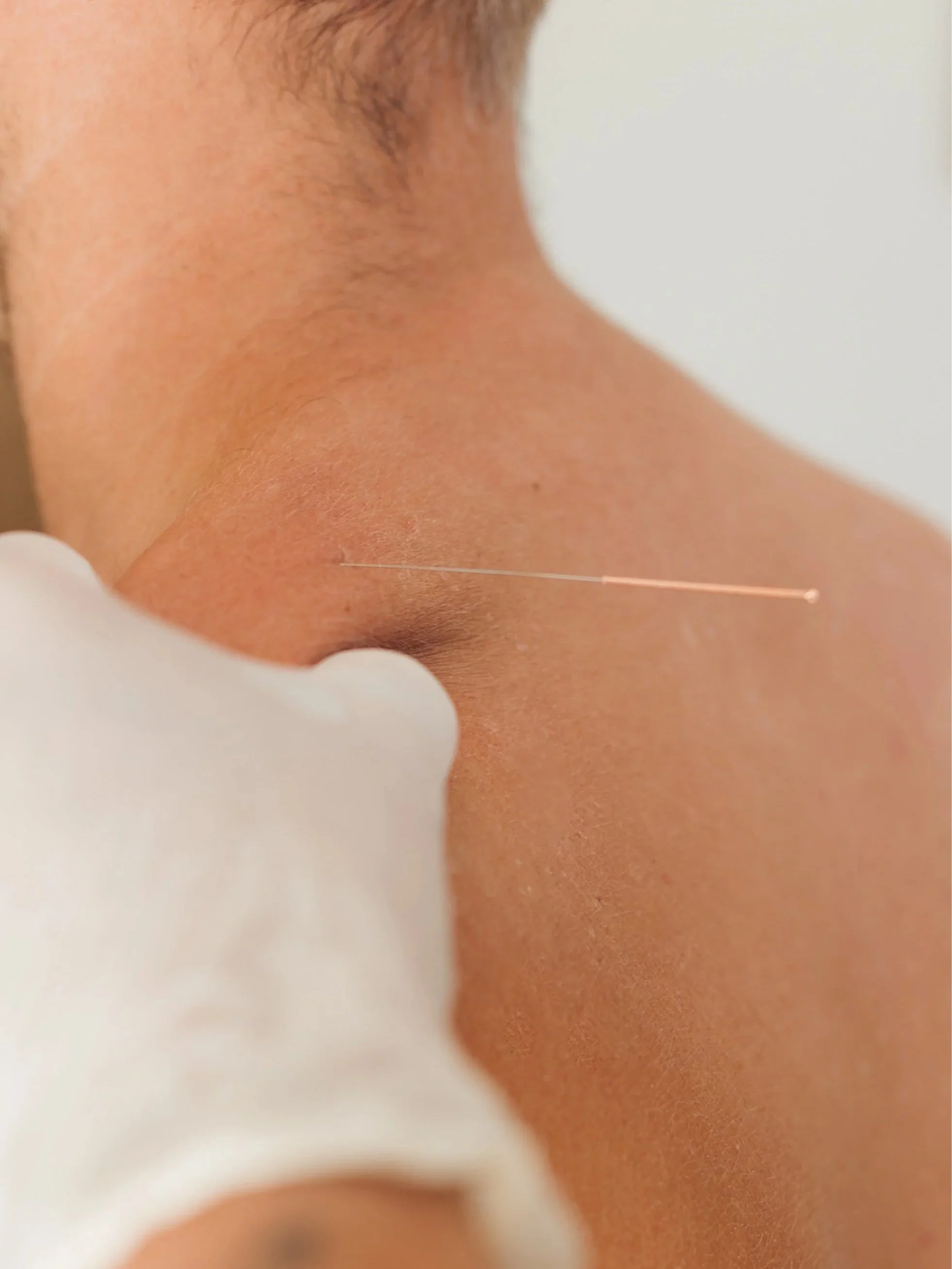
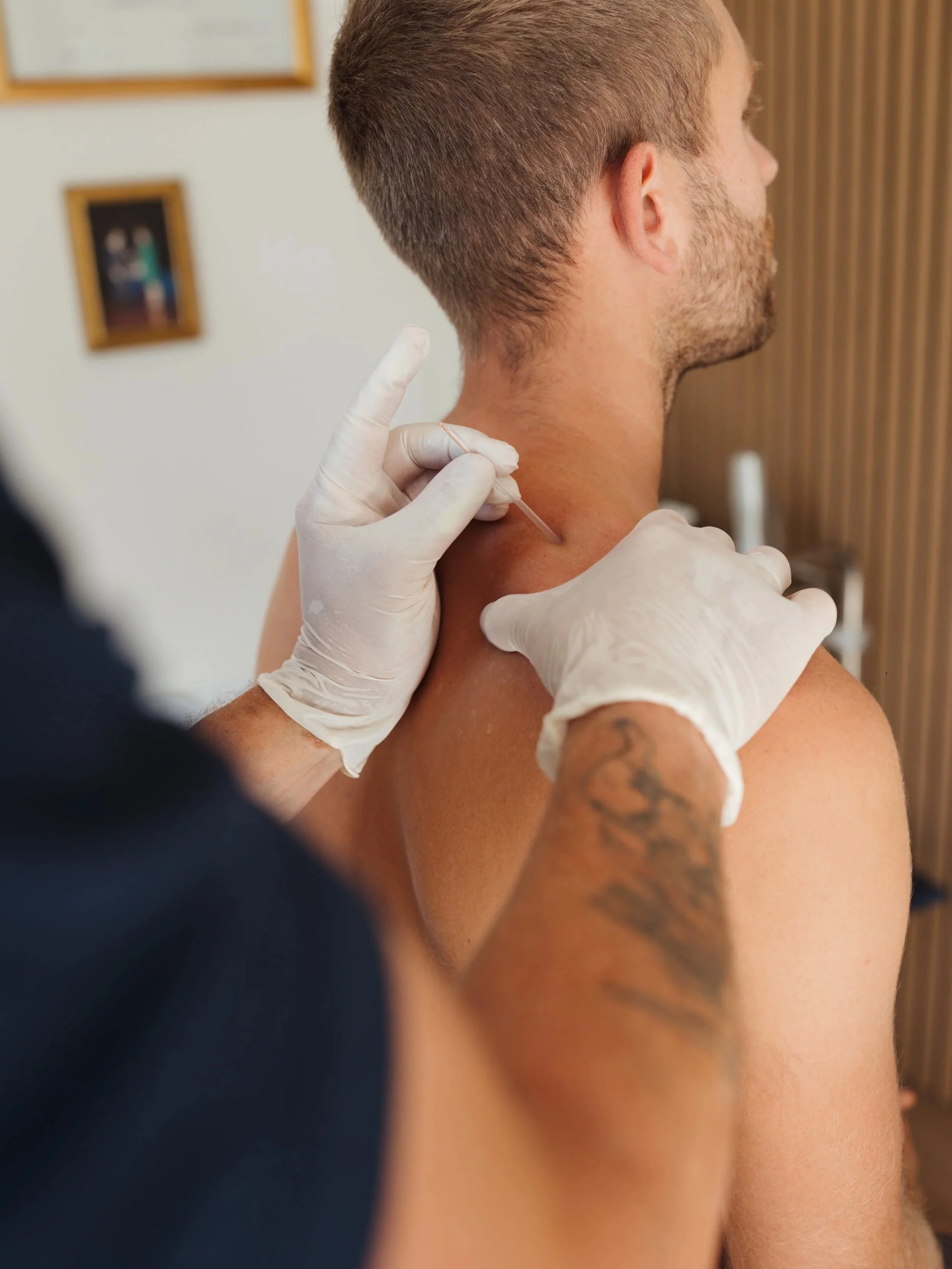
Dry Needling is a specialised treatment technique used to help relieve muscular pain, tension and dysfunction. It involves the insertion of very fine, sterile needles into specific areas of tight or irritated muscle, often referred to as trigger points.
The technique is designed to stimulate the muscle and nervous system, helping to reduce muscle tension, ease pain and improve movement. A small twitch response may sometimes be felt as the needle stimulates the muscle.
Unlike acupuncture, which is based on traditional Chinese medicine principles, dry needling is based on modern anatomy and is used specifically to target muscles, trigger points and areas of musculoskeletal dysfunction.
Dry needling is often used alongside osteopathic treatment, exercise and rehabilitation to provide a more comprehensive approach to managing pain and restoring normal movement.
What can Dry Needling help with?
Dry needling can be particularly useful for muscular pain and areas of persistent tension, including:
Neck and shoulder tension
Back pain and muscular tightness
Headaches associated with muscular tension
Tennis and golfer’s elbow
Hip and gluteal pain
Tight hamstrings and calf muscles
Sports injuries and muscular strains
Muscle knots and trigger points
Restricted movement and muscle stiffness
The suitability of dry needling will always be assessed as part of your individual consultation and treatment plan.
How does Dry Needling Work?
When a needle is inserted into a tight or sensitive area of muscle, it can stimulate a local response within the muscle and nervous system. This may help reduce muscle tension and sensitivity, improve circulation within the area and allow the muscle to move more freely.
For some patients, the improvement can be noticeable immediately, while others may require a number of treatments alongside exercise and other forms of osteopathic treatment.
Will it cause me any pain?
You may feel a small prick as the needle enters the skin, followed by a mild aching or twitching sensation as the muscle is stimulated. Most people find the treatment very well tolerated, and the intensity can be adjusted to suit your comfort level.
How many sessions will I need?
The number of sessions varies depending on your condition and how you respond to treatment. Some patients notice an improvement after one session, while others may benefit from several treatments alongside osteopathy and exercise.
Are there any side effects?
It is common to experience some mild soreness, tenderness or bruising following treatment. This usually settles within a day or two.